Email
overseas@ytsanchuan.com
-
- En
-
-

In 2026, Non-Revenue Water is no longer just a technical problem—it is a financial emergency for utilities worldwide. While physical leakage from aging pipes receives the most attention, a significant and often underestimated share of NRW comes from deliberate interference: magnets placed near meter registers to slow or stop counting, broken seals that allow register manipulation, reverse installation to run consumption backwards, and illegal bypass connections that route water around the meter entirely. For utilities managing thousands of residential, apartment, commercial, and municipal meter points, the cumulative revenue loss from these activities can represent millions of dollars annually.
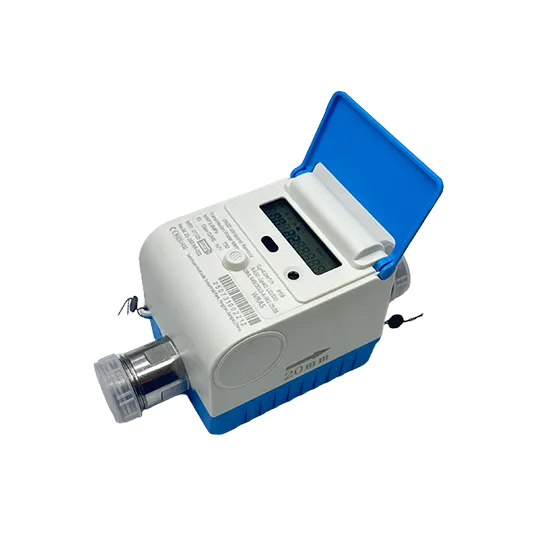
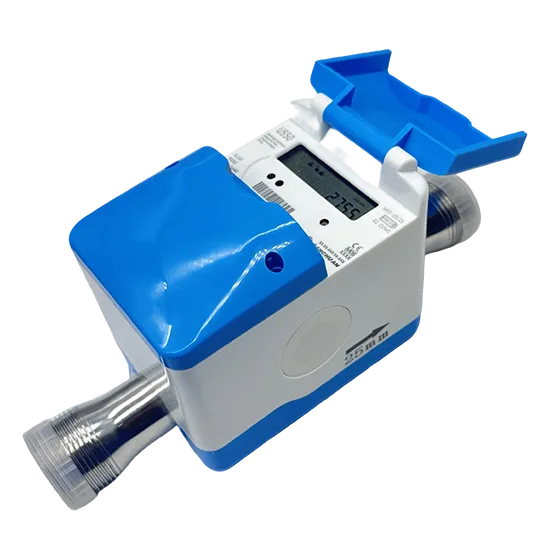
A well-engineered mechanical water meter is not a passive measurement device in this environment—it is a physical security asset. When it combines anti-magnetic transmission, tamper-evident lead seals, sealed register protection, optional check-valve structure, and remote reading capability, it becomes a practical and cost-effective tool for non-revenue water reduction and billing fairness. For buyers comparing mechanical water meter manufacturers, Sanchuan offers single-jet, multi-jet, rotary piston, and Woltman mechanical meters with anti-magnetic design, anti-tamper sealing, optional remote reading modules (pulse, NB-IoT, LoRa, wM-Bus), and ISO 4064 / MID compliance—covering residential, apartment, commercial, irrigation, and municipal applications. The sections below explain how each security mechanism works and how to specify the right combination for your project.
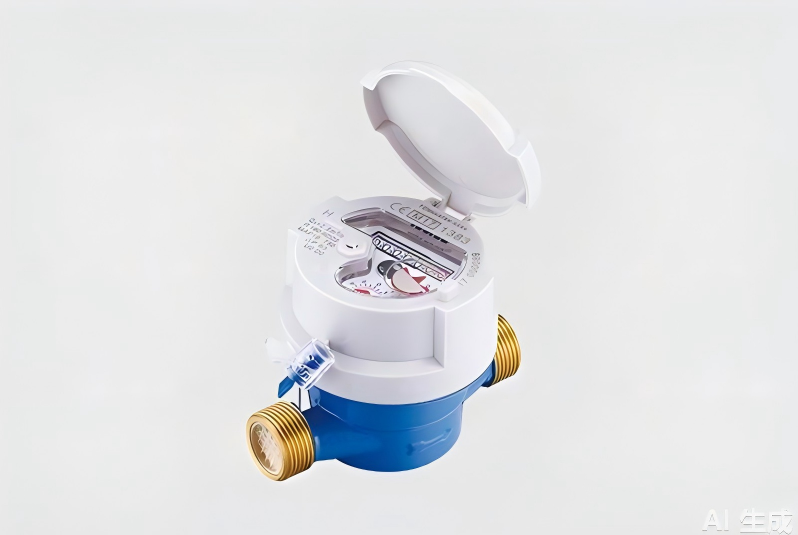
The argument for mechanical meters in anti-tamper applications is not nostalgia—it is physics and economics. A mechanical meter has no battery to drain, no firmware to exploit, and no wireless signal to intercept. Its measurement depends on the physical movement of a precision-engineered measuring element driven by water flow. Its security depends on the physical integrity of its seals, the resistance of its transmission to magnetic interference, and the visibility of any attempt to access or modify it.
The 2026 tamper landscape for utilities includes five recurring attack vectors:
Magnetic interference is the most common form of meter tampering in residential and apartment applications. A strong neodymium magnet placed against the meter body can, in some conventional designs, slow or stop the magnetic coupling between the wet measuring chamber and the dry register—causing the meter to under-register consumption while water continues to flow. The financial impact per tampered meter is modest individually but significant at scale across a large meter population.
Seal breaking allows physical access to the register or meter body. Once a seal is broken, the register can potentially be manipulated, the meter can be reversed, or the internal components can be accessed. Tamper-evident lead seals provide visible evidence of interference that can be detected during routine inspection without requiring meter removal.
Reverse installation exploits meters that register flow in only one direction. Installing a meter backwards—or temporarily reversing flow through a bypass—can reduce or reverse the consumption record. A check-valve structure prevents reverse flow from reaching the measuring element, protecting the consumption record from this manipulation.
Bypass connections route water around the meter entirely. While no meter design can prevent a bypass installed in the pipework, remote reading capability reduces the window between bypass installation and detection by providing continuous consumption data that can be compared against expected patterns.
Manual reading disputes arise when consumption records are contested and there is no independent data trail. Remote reading modules that provide timestamped consumption data reduce the frequency and cost of these disputes by providing an objective record that is independent of the physical meter reading.
Sanchuan's mechanical meter range is designed to address each of these attack vectors through a combination of anti-magnetic transmission, sealed register construction, tamper-evident sealing, optional check-valve structure, and optional remote reading output.

The anti-magnetic water meter design is the most technically specific security feature in Sanchuan's mechanical meter range, and it addresses the most prevalent form of meter tampering in residential and apartment applications.
The conventional magnetic transmission vulnerability:
In a standard mechanical water meter, the measuring element (impeller or piston) in the wet chamber is coupled to the dry register through a magnetic drive—a rotating magnet on the measuring element side that drives a corresponding magnet on the register side through the meter body wall. This design keeps the register completely dry and sealed, which is good for durability. However, it also means that a sufficiently strong external magnet placed near the coupling point can interfere with the magnetic drive, slowing or stopping register rotation while the measuring element continues to turn—causing systematic under-registration.
The anti-magnetic design response:
Sanchuan's anti-magnetic transmission uses precision-engineered components that resist external magnetic interference. The specific implementation—which may include magnetic shielding materials, alternative coupling geometry, or transmission designs that are less sensitive to external field interference—makes it significantly harder for a standard neodymium magnet to disrupt the register drive without specialized knowledge and equipment. The result is a meter that maintains accurate registration under the magnetic interference conditions that are practically achievable in a field tampering scenario.
The commercial value of anti-magnetic protection:
For a utility managing 50,000 residential meters, even a 1% tamper rate with an average under-registration of 5 m³/month per tampered meter represents 2,500 m³/month of unrecovered revenue—at typical residential tariff rates, a meaningful annual financial loss. Anti-magnetic meter design reduces this loss by making the most common tampering method ineffective, without requiring any change to the utility's inspection or enforcement procedures.
Sanchuan confirms that its mechanical meter technology incorporates anti-magnetic transmission and sealed register construction, with compliance to ISO 4064 and MID standards for billing acceptance across residential, commercial, and municipal applications.
Anti-magnetic transmission addresses electronic-style interference. The physical security layer—lead seals, sealed registers, and check-valve structure—addresses direct physical access and flow manipulation.
Lead seal and security seal: A lead seal or security seal is applied to the meter body at the point where the register housing meets the meter body, and at any access point that could allow internal manipulation. The seal is designed to show visible evidence of breaking if the meter is opened—providing a tamper indicator that can be detected during routine inspection without removing the meter. For utilities with large meter populations, the ability to detect tampering during a standard reading visit—rather than only during a full meter audit—significantly reduces the investigation workload and the time between tampering and detection.
Sealed dry register: The sealed register protects the counting mechanism from water ingress, dust, condensation, and direct physical manipulation. A fogged or water-damaged register is not only difficult to read—it is also a potential indicator of seal compromise. Sanchuan's sealed dry-register design maintains register clarity and integrity across the meter's service life, reducing both maintenance frequency and the ambiguity that can arise when a damaged register is used to dispute a consumption record.
Rotating dial option: A rotating dial register allows the meter to be read from multiple angles without requiring the meter to be repositioned—reducing the need for physical access to the meter body during reading and minimizing the handling that can damage seals or provide cover for tampering.
Check-valve / one-way valve structure: A check valve installed in or immediately downstream of the meter prevents reverse flow from reaching the measuring element. This protects against reverse installation tampering and against backflow from downstream pressure events that could distort the consumption record. For buyers specifying check-valve protection, the valve type, pressure loss contribution, and local code requirements should be confirmed in the RFQ—not every mechanical meter is supplied with a check valve by default, and the pressure loss of the valve must be compatible with the network operating pressure.
Optional remote reading modules: Pulse output, NB-IoT, LoRa, and wM-Bus remote reading options reduce the frequency of physical meter access required for reading, which in turn reduces the opportunity for tampering during reading visits and provides a continuous consumption data trail that supports anomaly detection and billing dispute resolution.
A secure mechanical meter should be selected by accuracy standard, tamper risk profile, installation environment, communication requirement, and lifecycle cost—not only by pipe diameter and price.
Meter Type Selection
| Meter Type | Best Application | Security Relevance |
|---|---|---|
| Single-jet | Standard residential, low-cost applications | Basic anti-tamper seal; suitable for lower-risk zones |
| Multi-jet | Residential and commercial, better low-flow accuracy | Anti-magnetic option; suitable for medium-risk zones |
| Rotary piston | High low-flow sensitivity, any-position installation | Positive-displacement accuracy; harder to under-register at low flow |
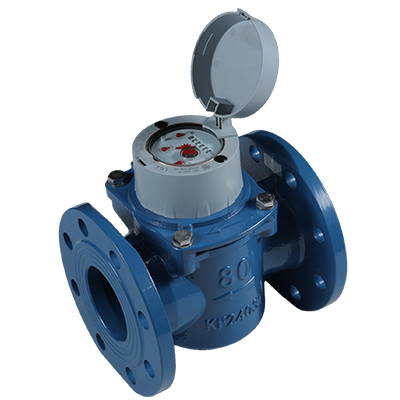
| Woltman | Large-diameter bulk metering, municipal and industrial | Anti-magnetic transmission; suitable for high-value billing points |
Complete Security Specification Checklist
Anti-magnetic design: confirm anti-magnetic transmission specification and the field strength it is designed to resist
Tamper-evident seal: lead seal, security seal, or numbered seal—confirm seal type and replacement procedure
Register type: sealed dry dial, rotating dial, or remote display—confirm readability and seal integrity
Check-valve option: built-in or external; confirm pressure loss, valve type, and local code compliance
Remote reading output: pulse (standard), NB-IoT (wireless AMI), LoRa (long-range wireless), wM-Bus (European AMR)—confirm platform compatibility
Accuracy standard: ISO 4064 Class B or Class C; MID approval for European markets; local utility acceptance standard
DN size and flow range: match to pipe size and expected consumption profile
Body material and durability: brass, composite, or stainless steel depending on water quality and installation environment
Service life target: confirm expected meter life and replacement cycle for TCO calculation
Step 1 — Map tamper risk by zone. High-density apartment buildings, shared meter points, remote irrigation connections, and historically high-loss neighborhoods represent higher tamper risk and justify stronger anti-tamper specifications. Lower-risk zones may be adequately served by standard mechanical meters with basic sealing.
Step 2 — Select meter type based on application and flow profile. Single-jet or multi-jet for standard residential and commercial billing; rotary piston where high low-flow sensitivity is required; Woltman for large-diameter bulk metering at DMA inlets or industrial supply points.
Step 3 — Specify security features based on risk assessment. Anti-magnetic transmission for zones with known or suspected magnetic tampering history; lead seal and sealed register as standard for all applications; check-valve option where reverse flow manipulation is a documented risk; remote reading output where continuous consumption monitoring is part of the NRW reduction strategy.
Step 4 — Confirm accuracy standard and approval. ISO 4064 Class B for standard residential billing; Class C where improved low-flow accuracy is required; MID approval for European market compliance; local utility acceptance standard for project approval.
Step 5 — Plan reading and inspection strategy. Define the reading interval, inspection cycle, and tamper indicator check procedure. Remote reading modules reduce the reading labor cost and provide continuous data for anomaly detection. Manual reading programs should include a seal integrity check at every visit.
Step 6 — Track tamper indicators systematically. Broken seals, abnormal zero consumption periods, sudden consumption drops, and reverse flow alarms (where available) are all indicators of potential tampering. A systematic tracking program converts these indicators into investigation triggers, reducing the time between tampering and detection.
Lower revenue loss from tampering is the primary financial return on anti-tamper meter investment. The cost of upgrading from a standard mechanical meter to an anti-magnetic, tamper-sealed equivalent is modest per unit—typically a small fraction of the annual revenue loss from a single successfully tampered meter point.
Fewer physical inspections from remote reading modules reduce the labor cost of the reading program and the opportunity for tampering during reading visits. For utilities with large meter populations in difficult-access locations, the labor saving from remote reading can justify the module cost independently of the anti-tamper benefit.
Reduced billing disputes from sealed registers, tamper-evident seals, and remote consumption data reduce the administrative cost of dispute resolution and improve customer confidence in billing fairness.
Longer service life from durable mechanical construction—brass body, sealed register, precision-engineered measuring element—reduces the replacement frequency and the associated procurement and installation cost over the meter's service life.
No power dependency for the core measurement function means the meter continues to register accurately during power outages, communication failures, and battery depletion events that can affect fully electronic meters. Remote reading modules add communication capability without making the measurement dependent on it.
Sanchuan confirms that its mechanical meters are low-cost, durable, easy to install, require minimal maintenance, and operate reliably without power—making them suitable for cost-sensitive, remote, and large-scale deployment environments where the total cost of ownership over a 10–15 year service life is the primary procurement criterion.
In 2026, protecting water revenue requires a mechanical water meter that goes beyond accurate flow measurement to provide physical security against the tampering methods that drive NRW in residential, apartment, commercial, and municipal applications. Anti-magnetic transmission resists the most common field attack. Tamper-evident lead seals provide visible evidence of physical interference. Sealed register construction protects the counting mechanism from manipulation and environmental damage. Check-valve structure prevents reverse flow exploitation. Optional remote reading modules provide continuous consumption data that supports anomaly detection and billing dispute resolution.
If you are comparing mechanical water meter manufacturers for a residential, commercial, apartment, irrigation, or municipal project, visit the Sanchuan Mechanical Water Meter product page and submit your requirements for a tailored recommendation and quotation.
Please submit the following details for an accurate recommendation:
Work condition: Residential, apartment, commercial, municipal, irrigation, indoor or outdoor, tamper-risk level (low/medium/high)
Quantity: Pilot quantity, project quantity, or annual procurement plan
Size/spec: DN size, meter type (single-jet/multi-jet/rotary piston/Woltman), accuracy class, anti-magnetic requirement, anti-tamper seal type, check-valve requirement, remote reading option (pulse/NB-IoT/LoRa/wM-Bus)
Target metrics: NRW reduction target, billing accuracy, tamper resistance level, low-flow sensitivity, service life, maintenance interval
Current problems: Water theft, magnetic interference, broken seals, reverse flow manipulation, billing disputes, manual reading cost, meter under-registration
1. What is a mechanical water meter?
A water meter that measures flow using moving mechanical components—impeller, turbine, or piston—driven by water flow. Available in single-jet, multi-jet, rotary piston, and Woltman types for different flow ranges and applications. Operates without external power for the core measurement function, making it suitable for remote and cost-sensitive deployments.
2. Mechanical water meter vs. smart water meter: which is better for anti-tamper applications?
Both have a role. A mechanical meter with anti-magnetic transmission, tamper-evident seals, and optional remote reading provides robust physical security at lower cost and without power dependency—suitable for most residential, apartment, and standard commercial applications. A fully smart meter adds real-time communication and data analytics but requires battery management, network planning, and higher unit cost. Many utilities use mechanical meters with optional pulse, NB-IoT, or LoRa modules as a balanced approach that combines physical security with remote monitoring capability.
3. What is the ROI of a tamper-proof water meter?
ROI comes from reduced water theft and under-registration (recovering billed revenue), fewer billing disputes (reducing administrative cost), fewer physical inspections (reducing labor cost), and longer service life (reducing replacement frequency). The financial return is highest in zones with documented tamper history or high NRW percentages where the revenue recovery from anti-tamper metering exceeds the upgrade cost within the first one to two billing cycles.
4. Do anti-tamper mechanical meters require pipeline modification?
Usually no major redesign is needed if the DN size and installation length match the existing pipework. If adding a check valve, the pressure loss contribution must be confirmed against the network operating pressure. If adding a remote reading module, confirm that the module fits within the available meter chamber space and that the communication signal (NB-IoT, LoRa, wM-Bus) is available at the installation location.
5. What parameters are needed for correct selection and quotation?
DN size, meter type, flow range (minimum and peak), accuracy standard, tamper risk level, anti-magnetic requirement, seal type, check-valve requirement, remote reading output type, installation environment (indoor/outdoor, water quality, temperature), quantity, and current NRW or tampering problem being addressed.