Email
overseas@ytsanchuan.com
-
- En
-
-

Selecting a water meter for a potable water project in 2026 is no longer purely a technical and commercial decision—it is a legal compliance decision. Across North America, Europe, and an expanding range of export markets, the water meter brass body and all wetted components in a drinking water system are subject to increasingly strict lead-content regulations, material safety standards, and certification documentation requirements. For utilities, distributors, project contractors, and OEM buyers, a meter that cannot demonstrate lead-free compliance is not just a procurement risk—it is a market-access barrier.
In the United States, lead-free plumbing products are defined by a weighted average lead content of no more than 0.25% across wetted surfaces, and NSF confirms that potable water products including meters, pumps, and tanks are subject to these lead-free requirements. In the European Union, new minimum hygiene requirements for materials and products in contact with drinking water—covering water meters, fittings, valves, pumps, and taps—will apply from December 31, 2026. For buyers sourcing a multi jet dry dial water meter for residential, commercial, or municipal drinking water applications, these regulatory timelines are not distant future concerns—they are active procurement criteria that determine whether a product can be legally installed, tendered, or exported in the target market.
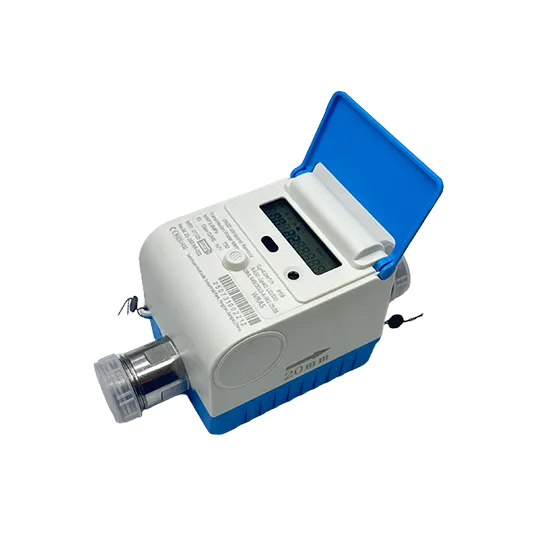
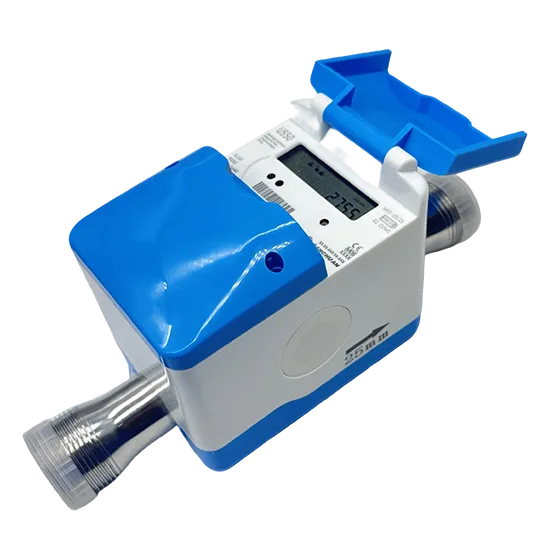
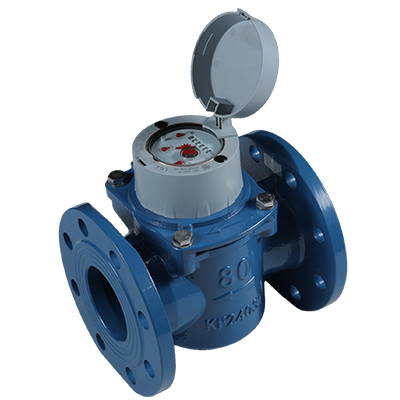
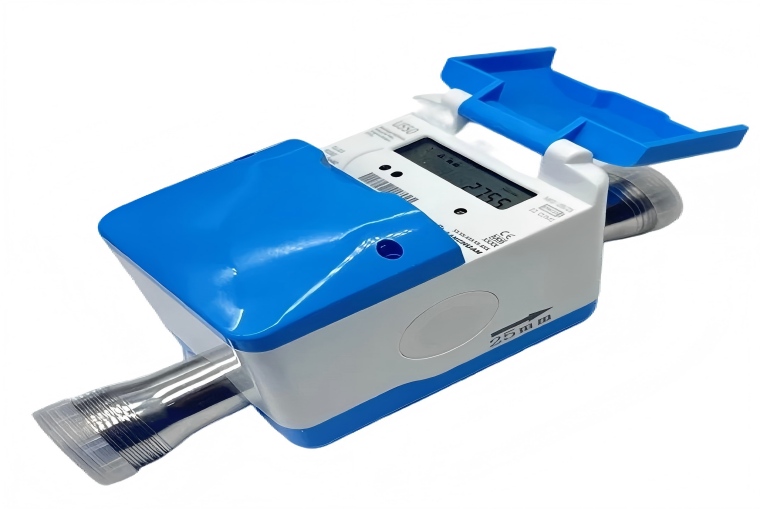
Sanchuan's LXSG-E5 multi-jet dry dial water meter combines brass/plastic housing, IP68-sealed dry register, ISO 4064 Class B accuracy, anti-magnetic transmission, and optional pulse or NB-IoT remote reading—with material and certification documentation to support global drinking water compliance requirements.
Brass has been the standard material for water meter bodies for decades, valued for its strength, machinability, pressure resistance, and long service life. In potable water applications, however, brass quality is now evaluated on a different axis: lead content, leaching risk, and certification documentation.
Traditional brass alloys used in plumbing and metering applications can contain lead as a machining aid, with some conventional alloys containing 2–8% lead by weight. In a drinking water system, lead can leach from wetted brass surfaces into the water supply—a health risk that has driven regulatory action in multiple markets simultaneously.
The 2026 compliance landscape for water meter brass:
In North American markets, NSF/ANSI/CAN 61 evaluates health effects from chemical contaminants that may be introduced into drinking water from system components and materials. NSF/ANSI/CAN 372 specifically addresses lead content in drinking water system components, requiring that wetted surfaces meet the 0.25% weighted average lead content threshold. Products sold into U.S. and Canadian potable water markets are expected to carry documentation demonstrating compliance with both standards.
In European markets, the EU Drinking Water Directive's new minimum hygiene requirements for materials in contact with drinking water will apply from December 31, 2026. This framework covers water meters explicitly, alongside fittings, valves, and other wetted components. Buyers sourcing meters for EU market installation or export need to confirm that the meter body material meets the applicable hygiene standard before the compliance deadline.
The practical procurement risk for buyers who do not verify brass compliance:
Tender rejection at the documentation review stage
Customs clearance delays or refusal in regulated markets
Project inspection failure requiring meter replacement
Brand liability exposure if non-compliant meters are installed in drinking water systems
Loss of preferred supplier status with utilities that have adopted strict material procurement policies
For distributors and OEM buyers building a global product portfolio, lead-free brass water meter documentation is not a premium feature—it is the baseline for market access in an increasing number of jurisdictions.
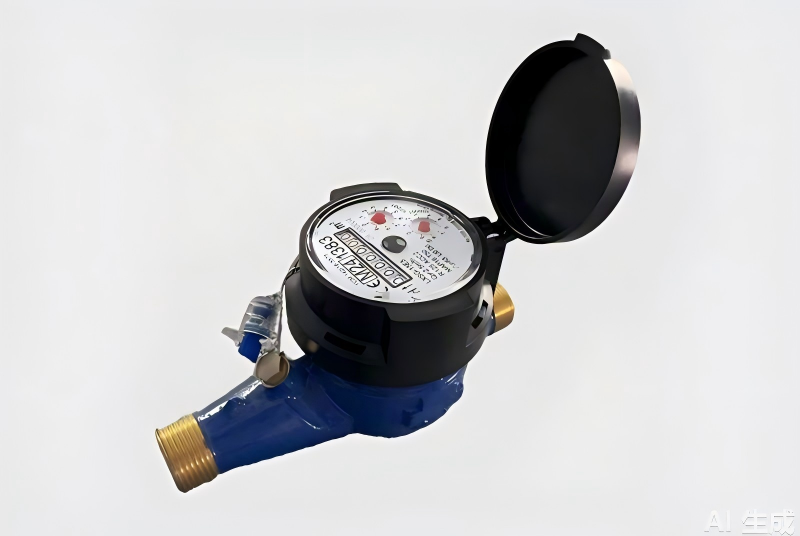
Understanding the measurement structure of the LXSG-E5 helps buyers appreciate why brass purity is relevant to both compliance and long-term performance.
The multi-jet measurement principle:
The LXSG-E5 directs multiple water jets symmetrically onto a rotating impeller inside the meter body. The symmetrical jet arrangement produces more uniform impeller loading than a single-jet design, improving measurement stability across the flow range and reducing sensitivity to flow profile disturbances. The impeller rotation is transmitted via magnetic coupling to a sealed dry register—the counting mechanism is completely isolated from the water, preventing water ingress, fogging, freezing damage, and direct manipulation of the register.

Key performance parameters from the LXSG-E5 specification:
| Parameter | LXSG-13E5 (DN15) | LXSG-20E5 (DN20) | LXSG-25E5 (DN25) |
|---|---|---|---|
| Permanent flow Q3 | 2.5 m³/h | 4 m³/h | 6.3 m³/h |
| Minimum flow Q1 (R100) | 0.025 m³/h | 0.04 m³/h | 0.063 m³/h |
| Minimum flow Q1 (R160) | 0.015625 m³/h | 0.025 m³/h | 0.039375 m³/h |
| Overload flow Q4 | 3.125 m³/h | 5 m³/h | 7.875 m³/h |
| Overall length L | 165 mm | 190 mm | 260 mm |
| Connection thread | G ¾ | G 1 | G 1¼ |
General specification: Accuracy Class 2; Maximum Permissible Error ±5% (Q2–Q4), ±2% at ≤30°C / ±3% at >30°C (Q1–Q2); Temperature Class T30 and T50; Nominal Pressure MAP 16 bar; Pressure Loss ΔP 0.63 bar; Indicating Range 99,999 m³; Resolution 0.00005 m³; Flow Profile Sensitive Class U0D0; Orientation Limitation: Horizontal; Pulse output 10 L/pulse.
Why brass purity matters in this structure:
The meter body is the primary wetted component—water flows through the brass housing continuously throughout the meter's service life, which is typically 10–15 years in residential and commercial applications. A brass body with elevated lead content creates a continuous leaching risk across this entire service period. A lead-free or low-lead brass body—such as C87800 silicon brass or equivalent alloys with ≤0.25% weighted average lead content across wetted surfaces—eliminates this risk and provides the material documentation required for NSF and EU compliance.
The LXSG-E5's brass/plastic housing design, combined with IP68 sealing and anti-magnetic transmission, supports both the mechanical durability required for long service life and the material compliance required for drinking water market access.
A complete RFQ for a compliant lead-free brass water meter should specify material, certification, accuracy, installation, and communication requirements—not only DN size and price.
Material and Compliance Specification
| Specification | What to Confirm | Why It Matters |
|---|---|---|
| Brass grade | Lead-free / low-lead brass, C87800 or equivalent | Supports potable water compliance |
| Lead content | Weighted average ≤0.25% across wetted surfaces | Required for NSF 372 and U.S. lead-free compliance |
| NSF certification | NSF/ANSI/CAN 61 and/or NSF/ANSI/CAN 372 | Required for North American potable water market |
| EU compliance | EU drinking water material hygiene standard | Required for EU market from December 31, 2026 |
| Material certificate | Third-party test report, batch traceability | Supports tender documentation and customs clearance |
Performance and Installation Specification
| Specification | LXSG-E5 Parameter | Application Relevance |
|---|---|---|
| Accuracy class | Class 2 (ISO 4064) | Standard residential and commercial billing |
| Dynamic range | R100 or R160 | R160 improves low-flow billing accuracy |
| Pressure rating | MAP 16 bar | Covers standard municipal water supply |
| Temperature class | T30 (cold water 0–30°C) / T50 (hot water 0–50°C) | Matches cold and hot water applications |
| Register protection | Dry dial, IP68 sealed | Protects readability and prevents manipulation |
| Anti-magnetic design | Anti-magnetic transmission | Resists magnetic tampering |
| Orientation | Horizontal installation | Confirm installation layout before ordering |
| Remote reading | Pulse 10 L/pulse; optional NB-IoT / AMR module | Supports smart utility integration |
| Connection thread | G ¾ (DN15), G 1 (DN20), G 1¼ (DN25) | Matches standard residential plumbing connections |
North American Potable Water Projects U.S. and Canadian utilities, contractors, and distributors sourcing meters for drinking water service must confirm NSF/ANSI/CAN 61 and 372 compliance. NSF confirms that potable water products including meters are subject to lead-free requirements. Buyers who cannot provide this documentation face tender rejection and potential legal liability. For export distributors building a North American product line, NSF-documented lead-free brass is the non-negotiable baseline.
EU Drinking Water Infrastructure From December 31, 2026, EU hygiene requirements for materials in contact with drinking water apply to new installations and repairs, including water meters. Buyers sourcing meters for EU market projects—whether for direct installation or for distribution to EU contractors and utilities—need to confirm that the meter body material meets the applicable EU standard before the compliance deadline. Early specification of compliant meters avoids the disruption of mid-project material substitution.
Municipal Residential Metering Programs Lead-free brass and reliable dry-dial accuracy help utilities reduce customer complaints, pass procurement audits, and demonstrate commitment to drinking water safety in public communications. For large-scale residential metering rollouts, the combination of material compliance documentation and ISO 4064 Class B accuracy supports both regulatory approval and billing fairness.
Apartment and Commercial Building Sub-Metering Multi-jet dry dial meters in DN15–DN25 are the standard specification for apartment and light commercial sub-metering. In buildings where the meter is installed in a potable water line serving multiple residents, lead-free brass compliance is both a regulatory requirement and a liability management measure for the building owner and installer.
Export Distributors and OEM Buyers Material certificates, lead-free declarations, and third-party certification documentation reduce customs clearance delays, tender rejection risk, and brand liability in export markets. For distributors building a global product portfolio, a meter with complete compliance documentation is easier to sell, easier to approve, and easier to defend in the event of a regulatory inquiry.
Step 1 — Define the target market and applicable compliance standard. U.S./Canada: NSF/ANSI/CAN 61 and 372. EU: EU drinking water material hygiene requirements (effective December 31, 2026). Other markets: confirm local water authority approval requirements. This step determines which documentation is mandatory before the meter can be legally installed or tendered.
Step 2 — Confirm brass grade and lead content documentation. Request the material certificate, lead content declaration, and third-party test report for the specific meter model and production batch. Confirm that the weighted average lead content across wetted surfaces meets the applicable threshold (≤0.25% for U.S. lead-free compliance).
Step 3 — Select meter size and flow configuration. DN15 (LXSG-13E5) for standard residential connections; DN20 (LXSG-20E5) for higher-demand residential or small commercial; DN25 (LXSG-25E5) for larger commercial connections. Select R100 for standard billing accuracy; R160 for improved low-flow sensitivity.
Step 4 — Confirm temperature class. T30 for cold water applications (0–30°C); T50 for hot water applications (0–50°C). The LXSG-E5 is available in both temperature classes.
Step 5 — Plan remote reading integration. Pulse output (10 L/pulse) for connection to existing data loggers; optional NB-IoT or AMR module for wireless AMI integration. Confirm platform compatibility before ordering.
Step 6 — Establish maintenance and inspection schedule. Dry dial register inspection for readability and seal integrity; periodic accuracy verification per utility policy; remote module battery and communication check where applicable.
Avoided legal and tender non-compliance cost is the primary financial return on lead-free brass specification. A single tender rejection or project inspection failure requiring meter replacement can cost multiples of the price difference between a compliant and non-compliant meter across the full project scope.
Reduced customs clearance delays from complete documentation packages improve project timeline predictability and reduce the administrative cost of compliance management for export distributors.
Longer service life from quality brass construction and IP68-sealed dry register reduces replacement frequency and the associated procurement and installation cost over the meter's 10–15 year service life.
Smart meter upgrade path from pulse output and optional NB-IoT module protects the initial meter investment by allowing integration into AMR/AMI systems without meter body replacement.
Brand credibility in premium markets from documented lead-free compliance and NSF/EU certification supports preferred supplier status with utilities and contractors who have adopted strict material procurement policies.
In 2026, water meter brass compliance is a market-access requirement, not a premium specification. Buyers sourcing a multi jet dry dial water meter for North American, European, or export drinking water markets must verify lead-free brass grade, wetted-surface lead content, NSF/ANSI/CAN 61 and 372 documentation, and EU drinking water material hygiene compliance—before the December 31, 2026 EU deadline and in alignment with existing U.S. lead-free requirements. Sanchuan's LXSG-E5 multi-jet dry dial water meter combines brass/plastic housing, IP68-sealed dry register, ISO 4064 Class B accuracy (Class 2), anti-magnetic transmission, R100/R160 dynamic range options, and optional pulse or NB-IoT remote reading—with material and certification documentation to support global drinking water compliance requirements.
Visit the Sanchuan Multi-Jet Dry Dial Water Meter product page to request a compliant meter configuration and quotation.
Please submit the following details for an accurate recommendation:
Work condition: Potable water, residential or commercial or municipal use, cold water (T30) or hot water (T50), indoor or outdoor chamber installation
Quantity: Sample order, project quantity, or annual procurement plan
Size/spec: DN size (DN15/DN20/DN25), brass grade requirement, lead-free standard (NSF/EU), Q3/Q1 flow range, dynamic range (R100/R160), pressure, temperature class, connection thread, remote output (pulse/NB-IoT/AMR)
Target metrics: NSF/ANSI/CAN 61/372 compliance, EU drinking water material compliance, accuracy class, service life, AMR/AMI readiness
Current problems: Failed certification review, lead-content concern, tender rejection, unclear material origin, poor register readability, non-compliant brass supply, customs clearance delay
1. What is a water meter brass body?
The brass housing that forms the main body of a mechanical water meter, providing structural strength, pressure resistance, and machinability. For drinking water applications, the brass body must meet lead-free requirements—typically ≤0.25% weighted average lead content across wetted surfaces—and carry the applicable certification documentation for the target market.
2. Lead-free brass water meter vs. plastic body water meter: which is better?
A lead-free brass water meter offers superior mechanical durability, pressure resistance, and long service life—suitable for most residential, commercial, and municipal applications. Plastic body meters reduce metal-content concerns and weight but may have lower pressure ratings and shorter service life in demanding environments. The best choice depends on local regulations, pressure conditions, installation environment, and tender requirements. In markets where lead-free brass documentation is required, a certified lead-free brass meter is the lower-risk procurement choice.
3. What is the ROI of using an NSF certified water meter?
ROI comes from avoided tender rejection and project rework costs, reduced customs clearance delays, stronger export market access, improved brand credibility with compliance-focused utilities, and lower legal liability exposure. For distributors building a global product portfolio, the documentation investment in NSF-certified meters is recovered through faster tender approval and reduced compliance management overhead.
4. Do buyers need to redesign pipelines to use compliant brass meters?
No, if the DN size, laying length, connection thread, and installation orientation match the existing meter specification. The LXSG-E5 uses standard G-thread connections (G ¾ for DN15, G 1 for DN20, G 1¼ for DN25) and standard laying lengths (165 mm for DN15, 190 mm for DN20, 260 mm for DN25), making it a direct replacement for most standard residential and commercial meter installations.
5. What parameters are needed for correct selection and quotation?
Target market and required certification (NSF/ANSI/CAN 61/372, EU drinking water compliance, or local standard), DN size, flow range (Q3 and minimum flow requirement), dynamic range (R100 or R160), temperature class (T30 or T50), maximum operating pressure, connection thread, installation orientation, remote reading requirement (pulse/NB-IoT/AMR), order quantity, and any current compliance or tender problems being addressed.